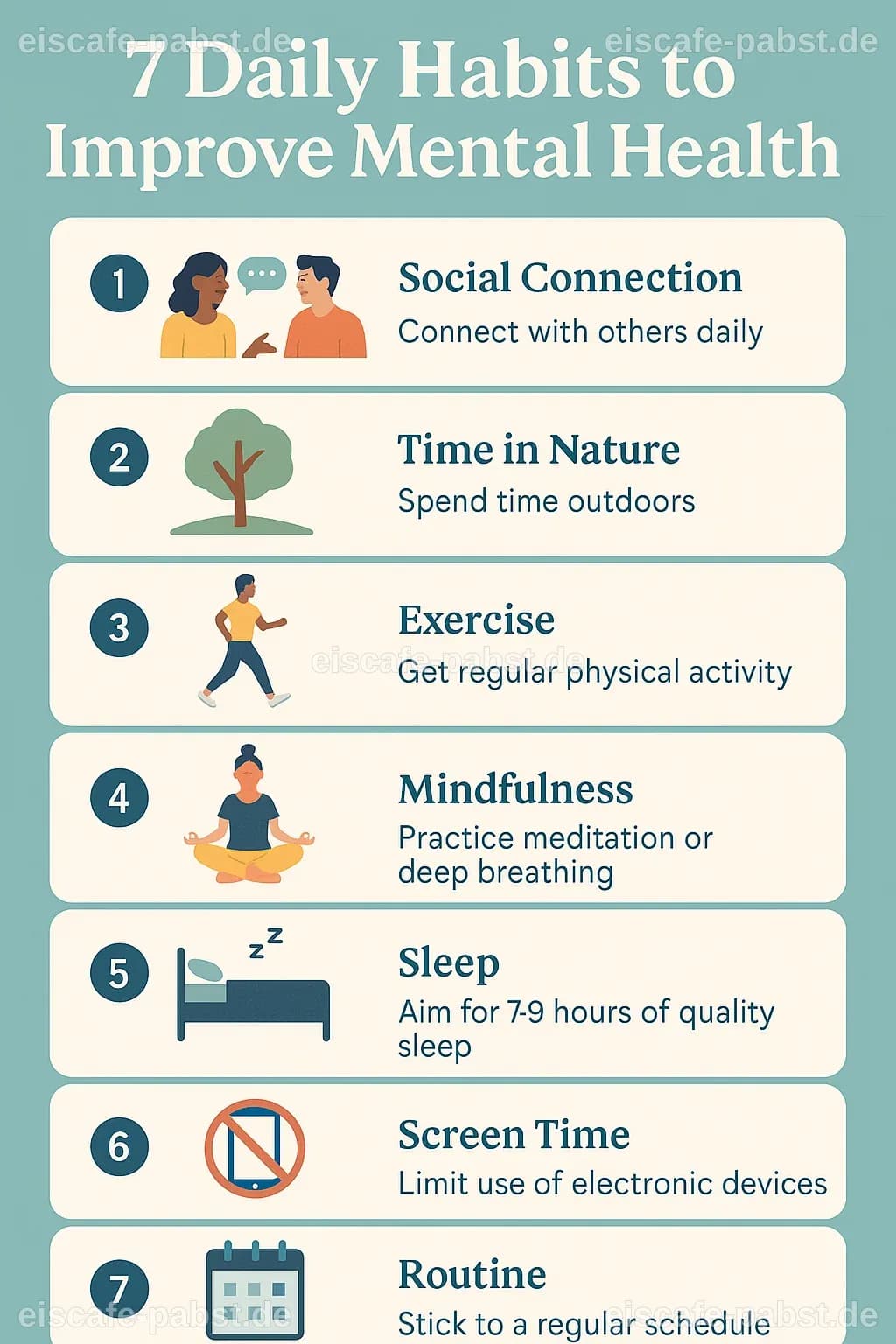
Bezzy communities provide meaningful connections with others living with chronic conditions. Join Bezzy on the web or mobile app. Can't get enough? Connect with us for all things health. We include products we think are useful for our readers. If you buy through links on this page, we may earn a small commission. Here’s our process Mental health is shaped by the small things you do day after day. From how you start your morning to how you respond to stress, everyday habits quietly influence your mood, energy, and resilience over time. While some factors that affect mental health are outside your control, there are practical, manageable ways to support your well-being through daily routines. Here’s what mental health professionals want you to know about daily habits that help boost mental health, and when it may be time to seek professional support. Mental health helps determine how you handle stress, relate to others, and make choices, explains Alison Seponara, a licensed professional counselor and author of the book “The Anxiety Healer’s Guide.” Seponara goes on to say that caring for your mental health can lead to: Nurturing your mental health can also help you manage health conditions that are worsened by stress, like heart disease, said Seponara. According to Oludara Adeeyo, a psychiatric social worker and author of “Self-Care for Black Women,” your mental health can impact everything about your life, including the ways you view and move through the world and your ability to handle the things life throws at you. That’s why building habits for better mental health can make a big difference in your day-to-day life. As you explore new behaviors and begin incorporating them into your routine, aim to frame these changes as self-kindness, not self-punishment. Maintaining a gentle, kind attitude toward yourself can do a lot more to improve your mental health and overall outlook than criticism and negative self-talk. Not sure where to start? You’ll find 8 strategies to promote improved mental health below, along with some guidance on seeking professional support. Sleep isn’t just a nonnegotiable for physical health. It also plays an essential role in mental health. The American Psychological Association reported in 2023 that sleep deprivation makes people less happy and more anxious. The quality of your sleep is also important. Disrupted sleep can contribute to mental health symptoms. To get enough high quality sleep, try starting with these habits: Healthy sleep habits can be harder to build on your own if you have a sleep disorder. If you think your sleeping issues may relate to a sleep condition, a sleep specialist can offer more information about helpful evidence-based treatments, like cognitive behavioral therapy for insomnia. Mental health concerns can also lead to poor sleep, which means changes to your sleep environment and nighttime routine might not make a lasting difference. If you don’t notice much improvement after trying these strategies, connecting with a therapist may be a helpful next step. “Constantly consuming information about other people’s lives may cause someone to compare themselves and promote feelings of low self-worth, which increases feelings of anxiety and depression,” says Adeeyo. To spend less time on social media, try to: Humans are social creatures, and strong relationships can have a positive influence on your mental health in various ways. Friendships, for example, can: You have plenty of options for cultivating positive connections and nurturing your friendships: Exercise offers a range of mental health benefits, including: Movement can involve something different for every person, and it doesn’t have to mean going to the gym if that’s not your thing. Instead, make movement enjoyable for you by opting for physical activities that work best for your body, health, and preferences. To get started, experiment with a range of physical activities, and keep doing the ones that resonate with you. Enjoyable movement could include: In other words, you don’t have to do a vigorous workout to support mental wellness. According to Christopher S. Taylor, PhD, LPC-S, founder of Taylor Counseling Group, “Taking a few minutes to stretch can make a huge difference for your overall mental health. Stretching will help with blood flow and get more oxygen through your body, which can help you feel more relaxed and happy.” What you eat can also influence your mental health. To support improved well-being, try expanding your diet to include foods rich in mood-supporting nutrients, such as: It can also help to simply ensure that you fuel your body every day, as eating something is better than not eating at all. Drinking plenty of water throughout the day is also beneficial. “When you’re dehydrated, you’re denying your brain and body the nutrients needed to survive and operate at a more optimal level,” Adeeyo noted. Additionally, some foods and drinks, especially alcohol, caffeine, refined carbs, fried food, and added sugars, may worsen anxiety symptoms. Limiting these when possible can help further support your mental health. On difficult days, you might find it tough to do any of the above, which might make you feel even worse. At times like these, KC Davis, a licensed professional counselor and author of “How To Keep House While Drowning,” suggests turning to compassionate, more accessible strategies, like: Another approach when mood is low is to choose just one small, manageable action each day that supports your well-being. “Whether it’s making your bed, drinking one glass of water in the morning, or writing in a journal, making this daily promise to yourself will help to eventually become a habit, and you will begin to feel empowered,” Seponara explained. Rosie Acosta, meditation and yoga teacher and author of the book “You Are Radically Loved,” suggests trying yoga Nidra, a sleep-based meditation. She recommends the following steps: If you only have a few minutes to relax, Acosta suggested these quick restorative practices: “The sun is a great source of vitamin D, and studies show it can improve attitude and mood,” explains Taylor. Your outdoor time doesn’t have to be long, either. As Taylor noted, “Five minutes of blue skies can do your mind and your heart some real good.” If you have several minutes, Taylor recommends: The strategies above can help improve mental well-being, but they can’t “cure” any mental health conditions. To put it another way, making changes in your habits may not always relieve persistent mental distress. Working with a therapist, however, can be a particularly powerful way to improve mental health. You can consider professional support at any time. You don’t need to have depression, anxiety, or any specific mental health symptoms to benefit from therapy. That said, reaching out becomes particularly important if you: Your mental health plays a key role in your quality of life. Many of the factors that can affect mental health remain beyond your control, but adding beneficial habits to your days can promote greater wellness. Just know that when it comes to adopting new habits, it’s generally more helpful to start with only one or two at a time, instead of a complete overhaul. Then, check in with yourself to take stock of how those changes helped. Day 20 Here are some quick tips to boost your mental health: Catch up on Day 19 of the challenge to learn about practicing gratitude. Margarita Tartakovsky, MS, has been writing for Healthline for more than a decade on a wide range of topics. She’s the author of the mental health journal “Vibe Check: Be Your Best You” (Sterling Teen). She’s especially passionate about helping readers feel less alone and overwhelmed and more empowered. You can connect with Margarita on LinkedIn, or check out her writing at her website. Share this article OUR BRANDS